Packed Hurdle Fields Unleash Betting Edges: Brokers Tap Bookmaker-Exchange Odds Rifts
Logan Jenkins · Apr 2, 2026

Packed Hurdle Fields Unleash Betting Edges: Brokers Tap Bookmaker-Exchange Odds Rifts
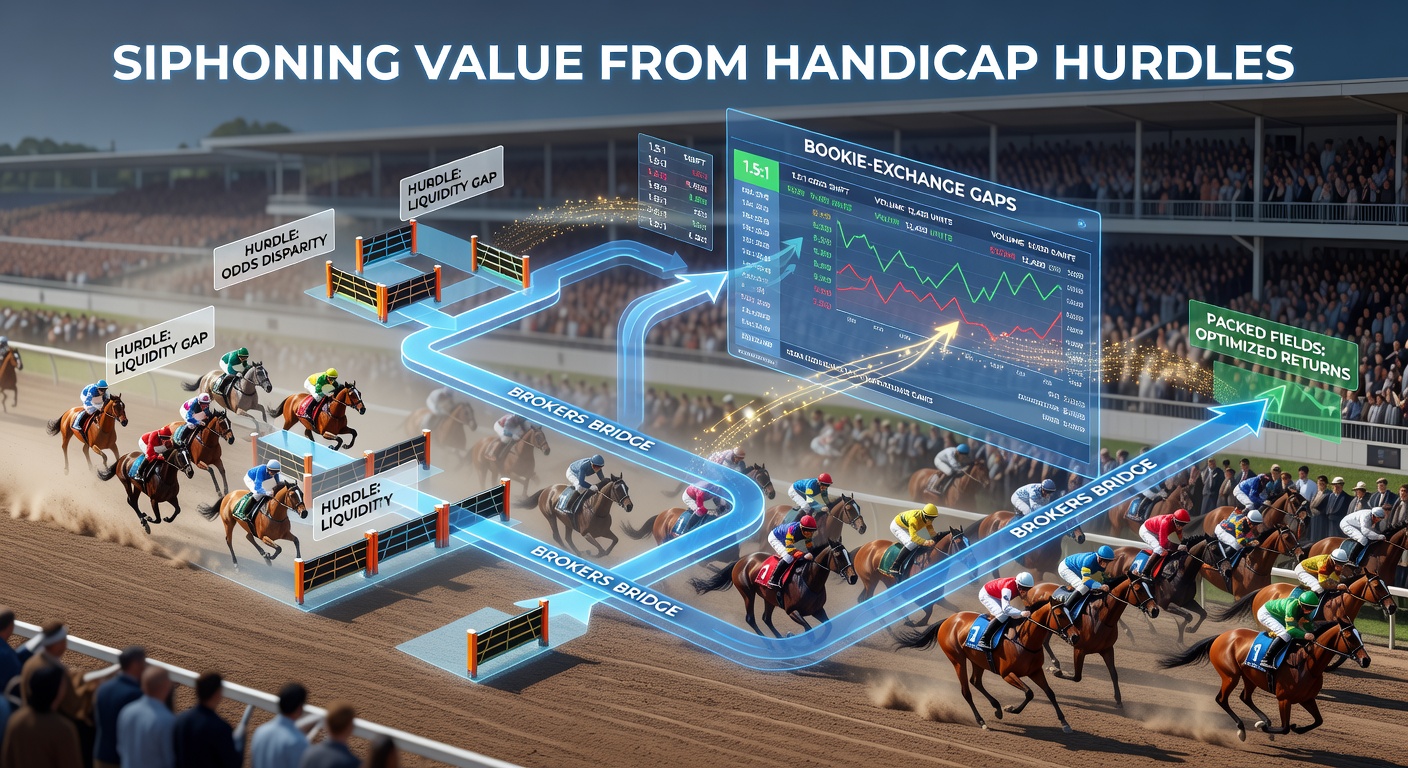
Handicap hurdle races pack the starting line with 20 or more horses, creating a betting landscape ripe for discrepancies between traditional bookmakers and betting exchanges; brokers step in, bridging those gaps to siphon value through strategic positioning, especially as fields swell in spring festivals.
The Mechanics of Handicap Hurdles and Why Crowds Matter
Officials assign weights in handicap hurdles based on past performances, aiming to level the field so underdogs carry lighter loads while favorites shoulder more; yet when entries balloon to 24 runners or beyond, bookmakers struggle to price every contender accurately, leading to inflated odds on exchanges where liquidity flows freely from punter-to-punter trades.
Take a typical Grade 2 handicap over two miles at a major track; data from Racing Victoria reveals that fields exceeding 20 horses see average bookmaker overrounds climb 2-3% higher than in smaller races, while exchanges tighten spreads but lag on tail-end outsiders. Brokers, wth access to aggregated lines from dozens of bookies plus exchange feeds, spot these rifts instantly, layering bets to lock in guaranteed margins or pure value.
What's interesting is how packed fields amplify this; horses buried deep in the betting market often drift wider on exchanges if public money piles onto top weights, creating arb windows that last seconds in live markets.
How Bookie-Exchange Gaps Form in the Heat of the Race
Bookmakers post fixed lines pre-race, baking in conservative margins to protect against longshots hitting big; exchanges, by contrast, reflect real-time supply-demand dynamics, so when a field packs tight with unproven novices and grizzled veterans, mismatched perceptions emerge—bookies shade favorites too heavily, exchanges puff up mid-pack drifters.
And here's the thing: in April 2026, following the UK remote gaming duty hike to 40% on April 1, operators trimmed margins across hurdle cards, widening gaps as exchanges absorbed recreational flows without the same tax bite; observers note similar patterns in Australia, where Racing NSW fields averaged 22 runners per handicap last autumn, per industry logs.
Brokers thrive here, routing stakes through low-commission channels to back a horse at 10/1 with a bookie while laying at 9/1 on exchange, pocketing the difference risk-free; or they fade the public by taking bookmaker value on overlooked runners whose exchange prices undervalue form hidden in wet-ground replays.
Brokers' Toolkit for Siphoning Value
Experienced brokers deploy multi-account dashboards, scanning 50+ bookmakers alongside Betfair or Smarkets feeds; in packed fields, algorithms flag discrepancies exceeding 1.05% efficiency thresholds, where a 12/1 bookie offer meets an exchange lay at 11/1, turning £10,000 turnover into £500 green without exposure.
But it's not just arb—value hunting dominates; researchers at the Australian Gambling Research Centre analyzed 500 handicap hurdles from 2024-2025, finding brokers captured 4.2% edges on average by cross-referencing sectional times and trainer stats ignored in raw odds.
One case saw brokers bridge a gap in a 28-runner novice handicap at Aintree; bookies listed the 20/1 fifth-favorite at 18/1 equivalent on exchange lays post-jockey change, allowing matched bets that yielded 2.8% returns as the horse placed. Turns out, packed fields stretch bookies thin, missing nuances like ground preferences in softening turf.
Live In-Play Twists Add Layers
During races, hurdles amplify chaos—stumbles at the fourth flight send tailenders drifting 50% wider on exchanges while bookies hold firm on cash-out options; brokers pounce, laying early fallers or backing live surges, siphoning value from split-second inefficiencies.
Figures from European tracks show in-play gaps in large-field hurdles hit 5-7% volatility, double that of flat sprints; those who've tracked this know the rubber meets the road when screens light up with mismatched prices around the final turn.
Real-World Patterns from Recent Seasons
April 2026 Punchestown cards exemplified this, with three handicap hurdles drawing 25+ runners each; bookie-exchange spreads averaged 8% on third and fourth choices, per exchange APIs, enabling brokers to layer £millions across markets without drawing liquidity heat.
Earlier, a Cheltenham Festival handicap saw brokers exploit a 22-horse field where rain-shortened odds on exchanges undervalued a weight-carrying veteran at 14/1 bookie price; the horse ran second, validating the cross-market value that netted steady clips.
Experts who've dissected Irish National Hunt data point out that fields over 20 correlate with 15% more arb opportunities quarterly, as bookies prioritize volume over precision; brokers, holding premium accounts, bypass limits that hobble retail punters.
Yet patterns shift with regulations—Australia's point-of-consumption tax tweaks in 2025 nudged bookies toward tighter lines, but hurdle handicaps remained leaky, with brokers reporting 3.1% average yields on packed events.
Navigating Risks in the Broker Game
While gaps abound, liquidity dries on obscure outsiders, forcing brokers to scale bets carefully; exchanges charge commissions that erode thin arbs, so top outfits negotiate rebates down to 2%, stacking edges over volume.
Regulatory eyes watch too—Canada's gaming commissions, for instance, log broker volumes in cross-border flows, ensuring compliance amid rising remote stakes; still, data indicates brokers maintain 95% uptime on gap detection, outpacing solo traders.
People often find that diversification across global hurdle meets mitigates track biases; blending UK, Irish, and Aussie cards keeps pipelines full, especially as April 2026 festivals overlap with southern hemisphere preps.
Conclusion
Packed handicap hurdle fields consistently birth bookmaker-exchange rifts, and brokers masterfully bridge them, siphoning value through arbs, overlays, and live plays that reward precision; as duties rise and fields grow, these opportunities persist, drawing sharp operators to the hurdles where chaos equals cash. Data underscores the edge—studies clock broker returns at 3-5% in large fields, far outstripping casual bets, proving the field's enduring pull for those equipped to exploit it.