Integrating Data Streams for Multi-Exchange Betting Coordination in Europe
Rosa Weber · Jun 13, 2026

Integrating Data Streams for Multi-Exchange Betting Coordination in Europe
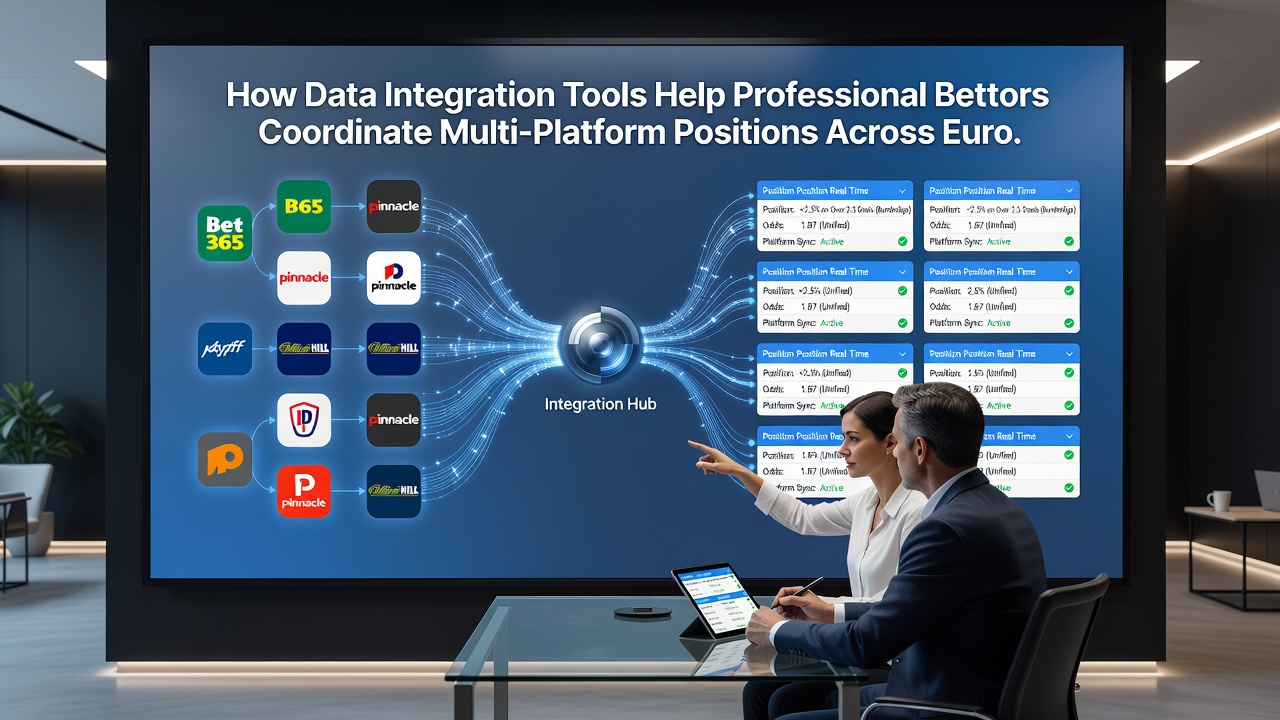
European betting exchanges operate on distinct platforms with varying liquidity pools, settlement rules, and data feeds, which creates coordination challenges for those managing positions across multiple venues simultaneously. Data integration tools address these issues by pulling live odds, stake limits, and account balances into unified interfaces that update continuously. Professionals who track these streams can adjust exposures without manual logins to each site, reducing delays that often erode narrow margins in matched betting or arbitrage setups.
Core Mechanisms Behind Cross-Platform Synchronization
These tools rely on API connections that standardize data from exchanges such as those licensed in Malta, Gibraltar, and other EU jurisdictions, while also incorporating feeds from bookmakers operating under different national frameworks. Real-time reconciliation engines compare back and lay prices across venues, flag discrepancies exceeding predefined thresholds, and execute offsetting orders when conditions align. Observers note that integration layers handle currency conversions and tax withholdings automatically, which keeps net position calculations accurate even when markets span several regulatory zones.
Latency management forms another critical component. Packet loss or delayed ticks can expose traders to unmatched risk, so the software employs buffering protocols and redundant server routes to maintain sub-second updates. Research from academic groups studying high-frequency financial systems shows similar techniques reduce execution slippage by measurable percentages, and the same principles apply directly to betting data flows.
Risk Management Through Consolidated Views
Position sizing becomes more precise when exposure across all platforms appears in a single dashboard. A bettor holding a large lay position on one exchange can instantly verify available back liquidity elsewhere before committing additional capital. Integration software also tracks cumulative liability limits imposed by individual operators, preventing accidental breaches that could trigger account reviews or stake reductions.
June 2026 brought heightened volatility in several football and tennis markets due to scheduling changes and player withdrawals, which increased the frequency of short-lived price gaps. Those using integrated systems reported faster detection of these opportunities compared with manual monitoring across separate browser tabs. The tools log every order submission timestamp alongside exchange confirmations, creating audit trails useful for internal performance reviews or external compliance checks.
Regulatory and Operational Context Across Regions
Different European countries maintain distinct reporting requirements for betting activity. Integration platforms often include modules that format transaction data according to the standards of each jurisdiction, easing the burden of periodic filings. A report issued by the European Gaming and Betting Association highlights how standardized data formats improve transparency for operators while supporting cross-border activity without manual re-entry of records.
One documented case involved a professional group coordinating positions on German and Spanish exchanges during a major tennis tournament. The software detected a temporary liquidity imbalance caused by differing settlement windows, allowed the team to hedge exposure before the discrepancy closed, and recorded the sequence for later analysis. Such examples illustrate how the technology converts fragmented market access into manageable workflows.
Academic studies on algorithmic trading in sports derivatives, including work from Canadian research institutions, have examined the impact of unified data environments on decision speed. Findings indicate measurable improvements in position accuracy when latency and reconciliation errors decline, patterns that mirror observations in European betting contexts.
Implementation Considerations for Professional Users
Setup typically begins with secure API key generation for each exchange account, followed by configuration of alert parameters tailored to specific strategies. Users define tolerance bands for price differences, maximum stake sizes per venue, and preferred order types. Once running, the system operates with minimal intervention except when manual overrides become necessary during unusual market events.
Security protocols receive equal attention. Encrypted connections, two-factor authentication at the integration layer, and regular key rotation reduce exposure to unauthorized access. Those managing larger volumes often route traffic through dedicated virtual private servers to further isolate trading activity from personal devices.
Conclusion
Data integration tools have become standard infrastructure for professionals who maintain simultaneous positions across European exchanges. By consolidating live feeds, automating reconciliation, and supporting jurisdiction-specific compliance, these systems convert dispersed market access into coordinated, auditable workflows. Continued refinement of API standards and latency controls will likely sustain their role as market complexity grows.