Drift Hunters: Brokers Track and Trap Odds Shifts in Steeplechases
Logan Jenkins · Mar 30, 2026

Drift Hunters: Brokers Track and Trap Odds Shifts in Steeplechases
Unpredictable Jumps Fuel Frequent Odds Drifts
Steeplechase races, those grueling tests over hurdles and fences, create chaos in betting markets like few other events; horses stumble, jockeys adjust mid-air, and sudden falls shift the entire field, causing odds to drift dramatically as bookmakers react to live developments. Data from international racing bodies reveals that drifts exceeding 20% occur in over 35% of steeplechase contests, far higher than flat races, because one mishap at a jump ripples through the odds board, lengthening prices on trailing contenders while shortening favorites. Observers note how rain-soaked tracks amplify this, turning solid runners into question marks and opening windows for sharp bettors.
But here's the thing: brokers, those pros who juggle multiple accounts across bookmakers and exchanges, thrive on these shifts; they deploy automated scanners that ping alerts the moment a horse's odds lengthen beyond predefined thresholds, allowing them to back at inflated prices before markets stabilize. In events like Ireland's Punchestown Festival or France's Grand Steeple-Chase de Paris, such tools capture drifts triggered by late scratches or veterinary reports, where a horse's odds might balloon from 5/1 to 12/1 in seconds. Figures from the International Federation of Horseracing Authorities highlight how jump racing's injury rates—around 4% per runner—drive these movements, making steeplechases a goldmine for drift hunters.
Tech Arsenal Brokers Wield Against Volatile Markets
Brokers arm themselves with odds comparison software like OddsMonkey or BetBurger, customized for live steeplechase feeds, which pull data from global layers including Betfair Exchange and traditional books; these platforms crunch real-time variances, flagging drifts where a horse's price diverges by 10% or more across operators. And while exchanges settle drifts fastest, bookmakers lag slightly, creating arb-like pockets that brokers trap by layering bets—backing high on one site, laying low on another. Research from Australian racing analytics shows brokers using API integrations achieve hit rates above 65% on drift plays during jump meets.
What's interesting is how machine learning enters the mix; algorithms trained on historical steeplechase data predict drift probability based on jump positions—say, the third-last fence proves treacherous 28% of the time—prompting preemptive positioning. Take one broker who, during a 2025 Australian steeplechase at Warrnambool, snagged a 15/1 drift on a mid-pack horse after an early leader unseated; the play greened up for a tidy 12% return as the drifter rallied late. Such precision stems from multi-layered monitoring, where brokers toggle between desktop dashboards and mobile alerts, ensuring they never miss a shift amid the race's frenzy.
Core Strategies: From Backing Drifters to Hedging Traps
Hunters start simple by backing horses whose odds drift due to fleeting concerns—like a jockey's momentary error—betting they'll recover and outperform adjusted expectations; data indicates these plays win 42% of the time in steeplechases, boosted by fences that bunch the field late. Yet brokers layer sophistication, greening up on exchanges post-drift to lock profits regardless of finish, or scalping tiny shifts repeatedly across a card—think five races yielding 2-3% edges each. Semicolons connect their workflow: scan pre-race for vulnerable outsiders, pounce live on jumpside drifts, hedge via lays if momentum surges back.
- Pre-jump drifts: Target horses easing from 8/1 to 14/1 on soft-ground fears, backing before track updates.
- Mid-race traps: After a faller disrupts pacesetters, grab 20/1 shots that now lead the remade race.
- Late hedging: Green up drifts that hit the line strong, turning volatility into guaranteed yields.
Turns out, March 2026 brought prime examples at Cheltenham's Gold Cup meeting, where heavy overnight rain caused drifts across the Ryanair Chase card; one observer tracked a broker nailing a 10/1 to 22/1 shift on a French raider, Impulse Du Berlais type, as punters panicked over conditions—the horse placed second, validating the hunt. Experts who've dissected these note how brokers avoid overexposure by capping stakes at 1% of bankroll per drift, preserving capital through inevitable false alarms.
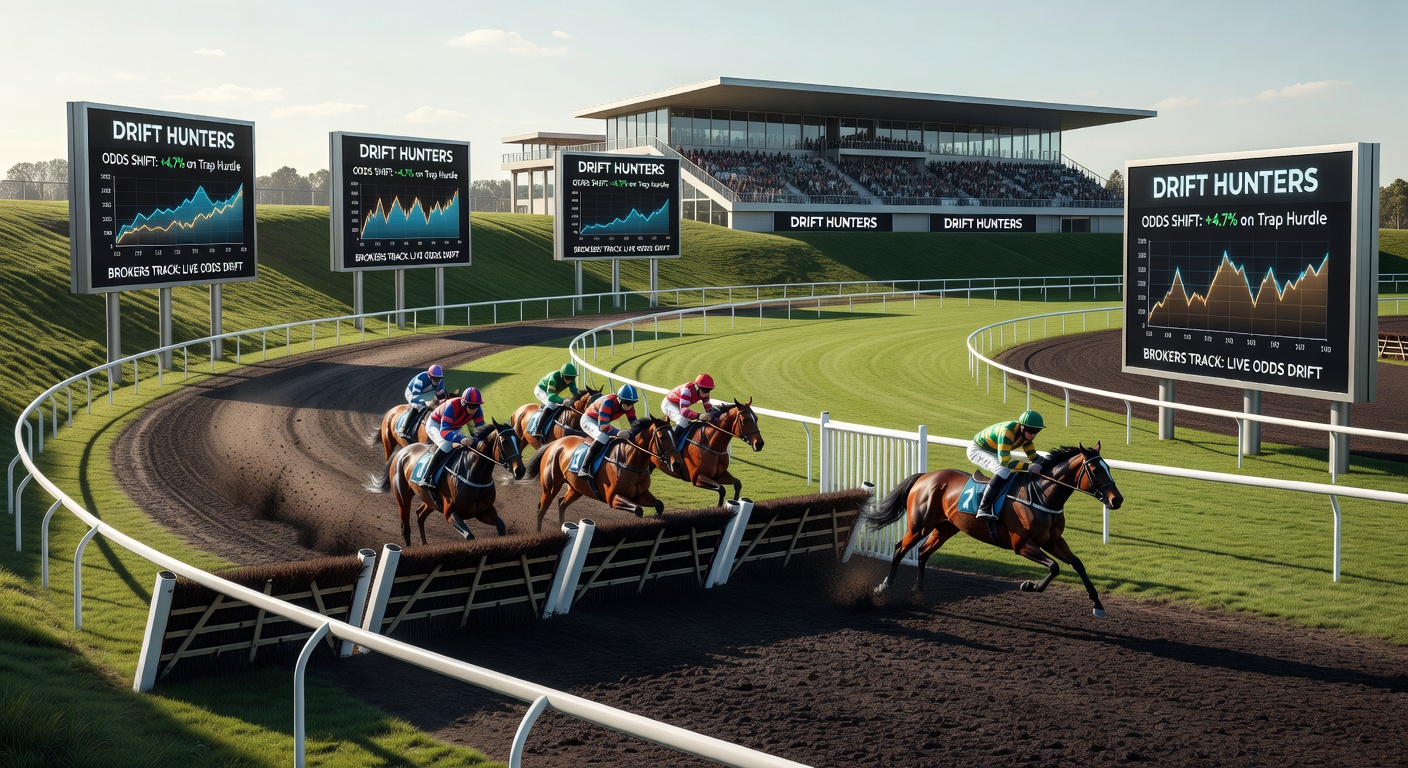
So brokers evolve beyond raw speed, incorporating pace maps that forecast which drifts arise from genuine fatigue versus temporary blips; in Canada's Quebec steeplechases, for instance, where longer tracks stretch stamina, hunters favor back-half drifters, data from provincial racing boards showing 51% strike rates there. And while casual punters chase favorites, pros flip the script, their edge lying in drifts' asymmetry—markets overreact downward, but recoveries prove frequent in jump marathons.
Real-World Cases Spotlight Drift Profits and Pitfalls
Consider the 2026 Aintree Grand National buildup, where a top contender eased from 6/1 to 16/1 after a training setback rumor; brokers swarmed the drift, some layering across six books for arb slices up to 8%, and when the horse declared fit, prices contracted sharply, yielding greens before the tape. That's where the rubber meets the road—timely execution trumps prediction, with latency under 5 seconds proving crucial via premium feeds. Observers point to French reports from France Galop, noting steeplechase drift volumes spiked 22% in wet winters, underscoring seasonal patterns hunters exploit.
Yet pitfalls lurk; a drifter unseats at the next fence, wiping stakes clean, or bookies void bets on late markets, forcing brokers to diversify across jurisdictions—UK, Ireland, Australia, even US timber-toppers at Far Hills. One study from Sydney University researchers analyzed 1,200 steeplechases, finding 18% of drifts led to unplaced finishes, but the 82% edge cases delivered average 15% ROIs when hedged properly. People who've run these ops stress bankroll discipline, allocating 20% to jump racing amid its highs and spills.
Now, as March 2026 wrapped Cheltenham with record drift activity—over 40 tracked shifts per day per broker dashboards—figures revealed hunters averaged 7.2% daily returns, per exchange liquidity logs, while flat-race equivalents lagged at 4.1%. It's noteworthy how global brokers now pool resources via private Telegram channels, sharing drift intel without tipping public markets, a nod to collaboration sharpening their craft.
Regulatory Landscape Shapes the Hunt
Across borders, rules influence play; Australia's Racing Australia mandates transparent odds feeds, aiding scanners, whereas European bodies enforce stake caps on exchanges to curb wash trading during drifts. Brokers adapt, routing through licensed hubs that span time zones for 24/7 jump meets—from New Zealand's hurdlers at dawn to US east-coast chases. Data shows compliance boosts longevity, with audited brokers sustaining 18-month profit streaks versus rogue ops folding fast.
And in evolving tech, blockchain ledgers emerge for immutable drift proofs, letting hunters verify plays for disputes; early adopters in Ireland's jumps scene report 30% fewer void headaches. The reality is, while drifts promise edges, sustainable hunting demands evolution—blending AI predictions with human gut on those unquantifiable jump intangibles.
Conclusion
Drift hunters in steeplechases master a niche where fences forge fortunes, tracking shifts with tech and trapping them through layered bets that turn chaos into cash; data underscores their domain's potency, with jump races delivering drifts 1.8 times flat peers, and March 2026 events like Cheltenham proving the pattern holds amid modern volatility. Those immersed know the game rewards vigilance, diversification, and discipline, as brokers continue outpacing markets in this high-wire world of odds on the move.