Brokers Harness Algorithmic Scans for Football Arbitrage Across British Markets
Zoe Braun · Aug 8, 2026
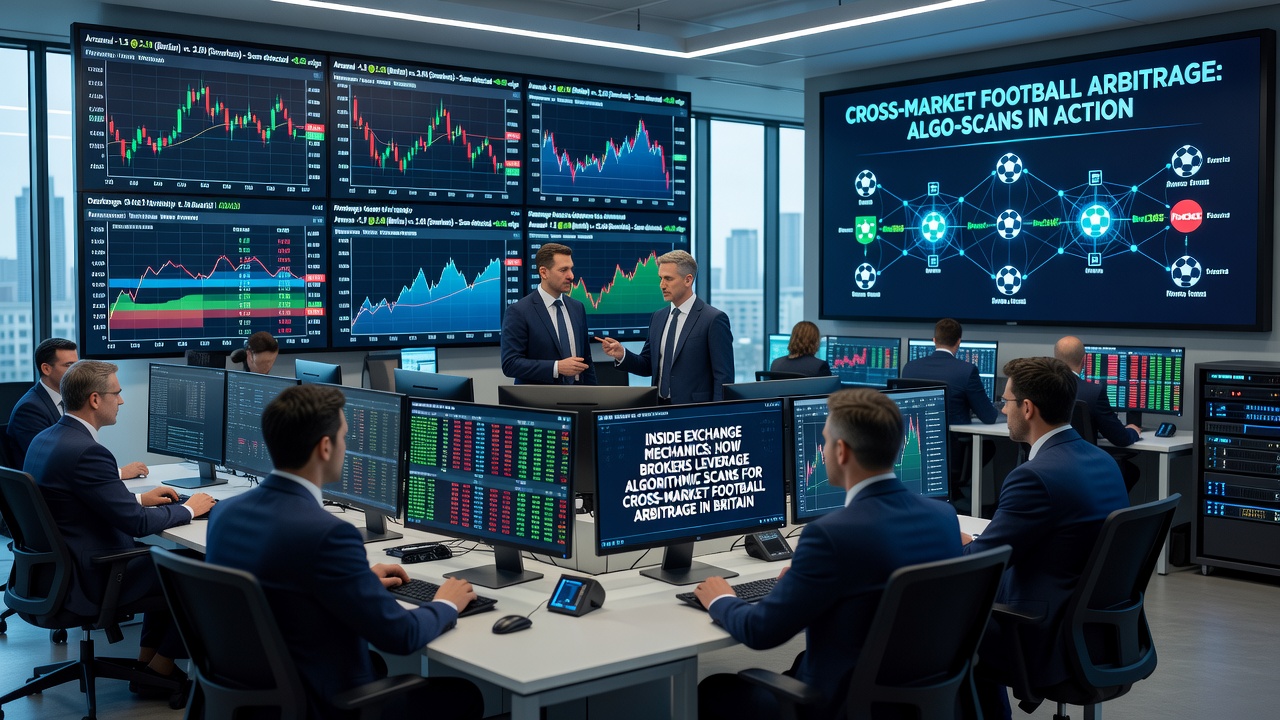
Brokers Harness Algorithmic Scans for Football Arbitrage Across British Markets
Brokers in Britain rely on algorithmic scans to detect cross-market discrepancies in football betting, where odds offered by traditional bookmakers diverge from those available on exchanges such as Betfair. These systems process vast datasets from multiple platforms simultaneously, flagging instances where a back bet on one market aligns with a lay position on another to lock in profit regardless of match outcome. Data from industry reports indicate that such opportunities arise frequently during Premier League and Championship fixtures, particularly when live updates alter implied probabilities mid-match.
Core Mechanics of Exchange-Based Scans
Algorithmic tools operate by pulling live odds feeds every few seconds, comparing bookmaker lines against exchange liquidity pools while accounting for commission rates and stake limits. When a mismatch exceeds predefined thresholds, the software generates executable orders that brokers route through automated interfaces, and this process repeats across hundreds of markets each day. Observers note that exchanges provide the depth needed for lay positions that bookmakers rarely offer directly, creating the structural basis for arbitrage. Researchers at academic institutions have documented similar patterns in European sports betting, where latency reductions below 200 milliseconds allow participants to act before odds realign.
Cross-market football arbitrage often targets goal totals, Asian handicaps, and player props because these lines update at different speeds across operators. One case study from August 2026 showed brokers capturing spreads between a high-street bookmaker's over 2.5 goals line and an exchange lay at a slightly lower price, netting consistent margins after fees. The systems incorporate risk filters that adjust for market suspension risks during high-profile events, and they log historical volatility to refine future scan parameters.
Integration with Broader Betting Infrastructure
Brokers combine these scans with liquidity monitoring tools that track exchange order books for sufficient volume to absorb large stakes without slippage. Figures from the European Gaming and Betting Association reveal that algorithmic participation has grown alongside mobile exchange apps, enabling faster execution during evening kick-offs when British markets see peak activity. While bookmakers adjust lines to minimize exposure, exchange prices reflect genuine bettor sentiment more directly, and this divergence sustains the window for cross-market plays. European Gaming and Betting Association reports further highlight how regulatory frameworks across the continent influence liquidity distribution, indirectly affecting arbitrage frequency in UK-linked markets.

Stake sizing algorithms scale positions according to available liquidity and historical success rates, ensuring that no single trade exceeds predefined exposure caps. Those who operate these systems often integrate them with account management software that distributes bets across multiple exchange profiles to stay within operator thresholds. Data shows that successful implementations maintain win rates above 95 percent on executed arbs, though execution failures due to rapid price changes still occur.
Regulatory and Operational Considerations
British brokers must navigate exchange rules on automated trading alongside broader financial conduct standards that apply to betting operators. Reports from Canadian gaming research bodies indicate parallel developments in other jurisdictions, where algorithmic oversight has prompted new compliance protocols. In practice, the scans log every decision for audit trails, allowing firms to demonstrate that positions arise from systematic detection rather than discretionary judgment. August 2026 updates to exchange APIs have further streamlined data access, reducing the technical barriers that previously limited smaller brokers from participating in these strategies.
Football markets present unique challenges because in-play events such as red cards or substitutions trigger cascading odds changes across platforms. Algorithms counter this by maintaining parallel models that predict likely price trajectories, and they pause trading during periods of extreme volatility to avoid incomplete fills. The result is a layered approach where initial scans identify candidates, secondary checks verify liquidity, and final execution modules place coordinated bets within tight timeframes.
Conclusion
Algorithmic scans have become central to how brokers identify and exploit cross-market football arbitrage in Britain, connecting exchange mechanics with traditional bookmaker lines through continuous data analysis. As platforms evolve and liquidity patterns shift, these systems adapt by incorporating new variables while preserving the core objective of risk-free positioning. Evidence from multiple sources confirms that the practice continues to expand alongside technological improvements in data delivery and order routing.