Broker Networks Bridge Exchange Liquidity and Fixed Lines in Endurance Sports Markets
Zoe Ludwig · Jul 13, 2026

Broker Networks Bridge Exchange Liquidity and Fixed Lines in Endurance Sports Markets
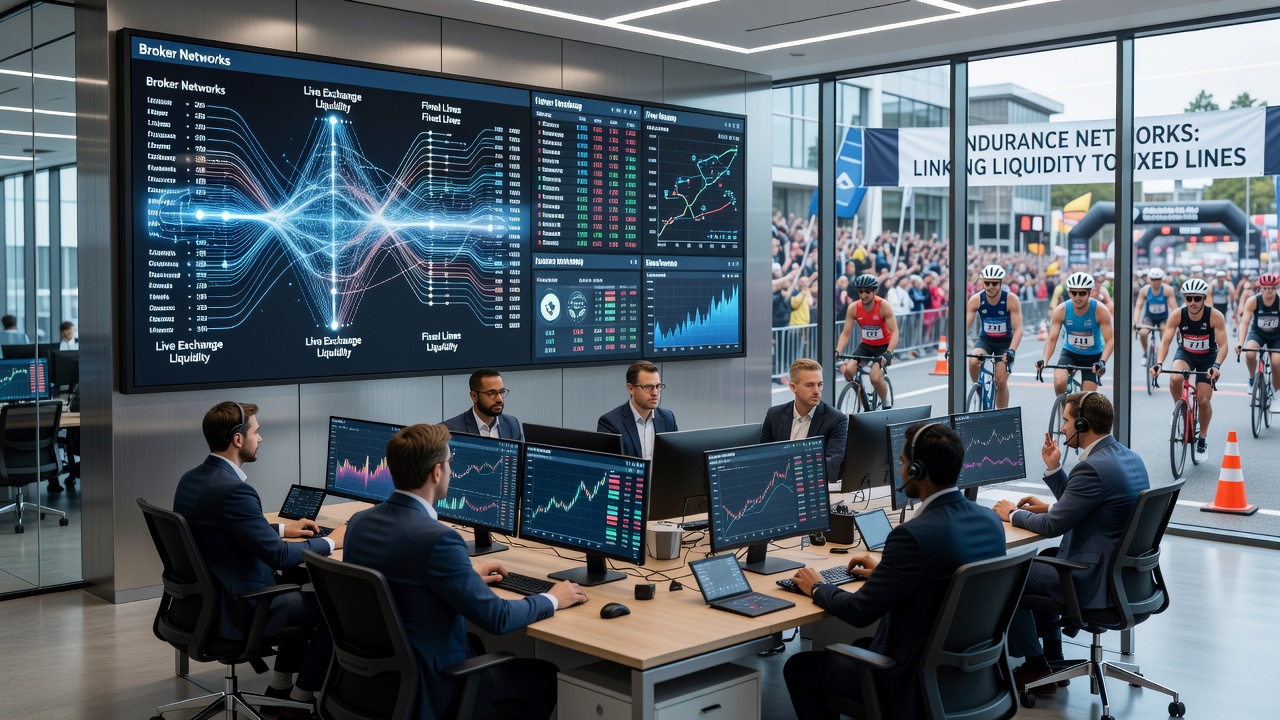
Broker networks operate by connecting live liquidity pools from betting exchanges directly to fixed-odds lines offered by traditional bookmakers, and this linkage has gained traction across endurance events such as marathons, ultra-trail races, and multi-stage cycling tours. Those who study market structures note that exchanges provide depth through back and lay options while fixed lines deliver immediate settlement without counterparty risk, so networks match orders across both sides to capture spreads that emerge during prolonged competitions.
Mechanics of Liquidity Integration
Traders place orders on exchanges where prices fluctuate in real time based on incoming bets, yet fixed-odds operators maintain static lines until adjustments occur. Broker systems scan both environments simultaneously and route matched volume from exchange liquidity into fixed-line positions when discrepancies appear, which often happens in events lasting several hours because participant fatigue and weather shifts alter implied probabilities continuously. Data from trading platforms shows volume spikes during key segments like mountain stages in cycling or final kilometres in marathons, where liquidity thins on exchanges and brokers step in to balance flow.
Application Across Specific Endurance Formats
In ultra-running circuits, networks monitor heart-rate telemetry feeds and historical pacing data to adjust exposure between exchange layers and bookmaker offerings, allowing positions to roll over multiple checkpoints without manual intervention. Cycling grand tours present similar patterns because stage profiles change daily and teams alter tactics mid-event, prompting brokers to move liquidity from deep exchange books into fixed lines that hold until the next feed update. Observers note that triathlon markets follow comparable flows, especially in transition zones where athlete positioning creates short-lived price gaps that automated bridges exploit within seconds.
Technological Infrastructure Supporting These Networks
API connections form the backbone, enabling real-time price feeds from multiple exchanges to reach fixed-line risk engines operated by brokers. Algorithms compare depth at each price point and execute transfers when thresholds trigger, which researchers at institutions such as Swinburne University have examined in studies of high-frequency market linkages. Redundancy protocols ensure continuity during outages, and compliance layers filter activity according to jurisdictional rules that differ between regions hosting these events. July 2026 saw several endurance calendars incorporate additional digital checkpoints, increasing the number of data points brokers could ingest and thereby expanding the windows available for liquidity bridging.
Market Participants and Volume Patterns
Professional syndicates and smaller syndicates alike utilise these bridges, with larger entities maintaining dedicated servers while individuals access white-label interfaces provided by the networks themselves. Volume reports from industry bodies indicate that endurance-related turnover on bridged platforms rose noticeably during the first half of 2026 compared with earlier periods, driven partly by expanded coverage of trail-running series in North America and Europe. Those tracking order flow describe clusters of activity around aid stations and feed zones, where updated athlete status triggers rapid repricing across both exchange and fixed environments.
Regulatory Context in Multiple Jurisdictions
Authorities in Australia and Canada have issued guidance on cross-platform matching, requiring brokers to maintain audit trails that separate exchange-matched portions from fixed-line settlements. The Canadian Gaming Regulators Association published updated technical standards in early 2026 that address latency requirements for such linkages, ensuring participants receive equivalent treatment regardless of which side of the market they enter. These frameworks differ from approaches taken elsewhere yet share common goals around transparency and orderly market function.
Future Developments and Integration Trends
Emerging sensor networks on race courses promise finer-grained data streams that could further tighten the coupling between exchange liquidity and fixed lines. Network operators already test machine-learning models that predict liquidity migration during weather disruptions common in long-distance events, and pilot programmes launched in July 2026 showed measurable reductions in unmatched orders. Industry associations continue to examine standardisation of data formats so that brokers operating across borders can maintain consistent bridges without custom integrations for each new endurance series.
Conclusion
Broker networks continue to evolve the connection between exchange liquidity and fixed lines, particularly in endurance sports where event duration creates repeated opportunities for price alignment. The infrastructure, participant behaviour, and regulatory settings together shape how these linkages function today, and further sensor integration plus refined compliance tools will likely extend their reach into additional formats over coming seasons.