Bridging Fluctuating Markets: Settlement Networks in Cricket and Snooker Betting Exchanges
Zoe Braun · Jun 24, 2026

Bridging Fluctuating Markets: Settlement Networks in Cricket and Snooker Betting Exchanges
Settlement networks operate as intermediaries that reconcile back and lay positions across multiple exchange platforms, particularly when cricket and snooker markets experience rapid price shifts during live play. These systems match unmatched bets, adjust for liquidity differences, and settle outcomes once events conclude, which reduces exposure for traders who layer positions across bookmaker odds and exchange interfaces.
Data from industry reports in early 2026 shows cricket exchanges handling higher volumes during Test matches and limited-overs tournaments, while snooker events draw steady interest through frame-by-frame trading. Settlement networks bridge these by routing unmatched orders to counterparties on separate platforms, allowing participants to maintain balanced books without manual intervention each time odds move.
Mechanics of Settlement in Live Cricket Exchanges
Cricket markets fluctuate with every over, wicket, or boundary, creating opportunities for layered wagers where traders back one outcome on a bookmaker and lay the same or related positions on an exchange. Settlement networks process these by verifying bet status in real time, calculating net exposure across accounts, and executing final payouts once the match result is confirmed. Observers note that during the June 2026 season, networks handled increased traffic from IPL and international fixtures because automated reconciliation tools kept pace with score updates and player statistics feeds.
Those who monitor exchange activity find that settlement protocols often incorporate multi-platform APIs to pull liquidity data from both cricket and snooker venues simultaneously. This approach lets a trader who has opened a layered position in a cricket over market offset risk by shifting part of the stake into a snooker frame market when correlations appear, all while the network tracks settlement timelines to avoid timing mismatches.
Snooker Exchange Dynamics and Network Integration
Snooker sessions produce distinct volatility patterns because frame scores update incrementally and tournament progression affects outright markets. Settlement networks integrate snooker exchanges by confirming frame winners, adjusting for handicap lines, and clearing bets that span multiple sessions. Researchers at academic institutions have documented how these networks reduce settlement delays compared with manual clearing, particularly when traders maintain positions across both sports during overlapping broadcast schedules.
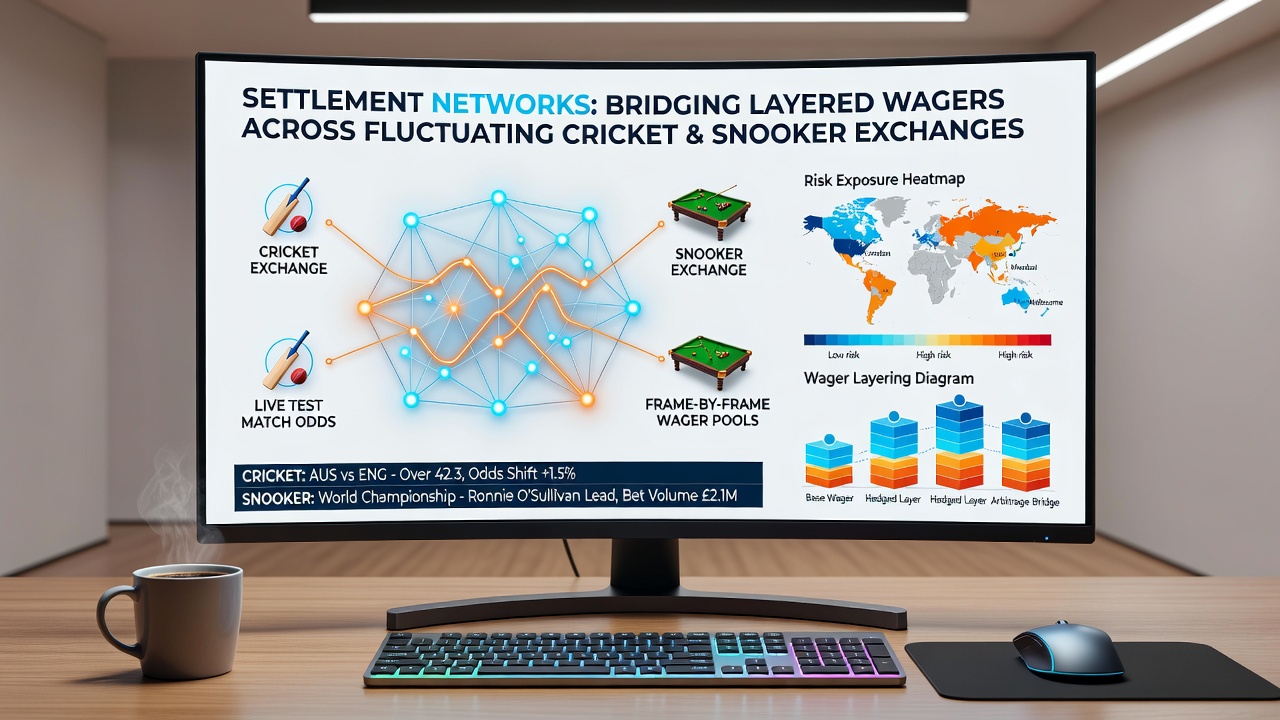
What's notable is the way networks handle partial settlements when matches extend into extra time or additional frames. In June 2026, reports from the Australian Gambling Research Centre highlighted similar cross-sport reconciliation techniques used in other regions, where layered bets on cricket totals and snooker century breaks were cleared through unified ledgers that accounted for currency conversions and platform fees in a single pass.
Layered Wager Strategies Across Both Sports
Traders frequently construct positions that combine cricket run-rate markets with snooker match-handicap lines, relying on settlement networks to keep exposure within defined limits. The networks scan for unmatched orders, route them to available liquidity, and flag any discrepancies before final settlement. This process supports strategies that would otherwise require constant manual monitoring during live events.
Industry analyses from the European Gaming and Betting Association indicate that settlement efficiency improves when networks incorporate predictive scoring models for both cricket and snooker, allowing preemptive matching ahead of confirmed results. Participants who maintain accounts across several exchanges benefit because the system aggregates positions and delivers consolidated statements rather than separate clearing runs for each platform.
Operational Challenges and Network Adaptations
Network operators face issues when exchange liquidity dries up during low-attention periods or when regulatory changes alter reporting requirements for cross-border bets. In response, many systems now include fallback protocols that reroute orders to alternative venues or pause layering until sufficient counterparties appear. Those who study these adaptations report that cricket markets tend to recover liquidity faster than snooker frames because of broader global interest, yet snooker outright markets offer longer settlement windows that aid risk balancing.
Settlement accuracy depends on reliable data feeds from official scorers and governing bodies. Any delay in score confirmation can postpone final payouts, which affects traders holding multi-sport layers. Networks mitigate this through redundant verification steps that cross-check multiple sources before releasing funds.
Conclusion
Settlement networks continue to evolve as essential infrastructure for participants who layer wagers across cricket and snooker exchanges. By automating reconciliation, managing exposure across fluctuating prices, and supporting multi-platform strategies, these systems enable consistent operation even when individual markets shift rapidly. Data from June 2026 and earlier periods shows sustained usage during major events, confirming their role in maintaining orderly settlement across both sports.