Aligning Worldwide Betting Lines: UK Specialists Expand Coverage Through Cross-Border Odds Comparisons
Zoe Braun · Jun 6, 2026
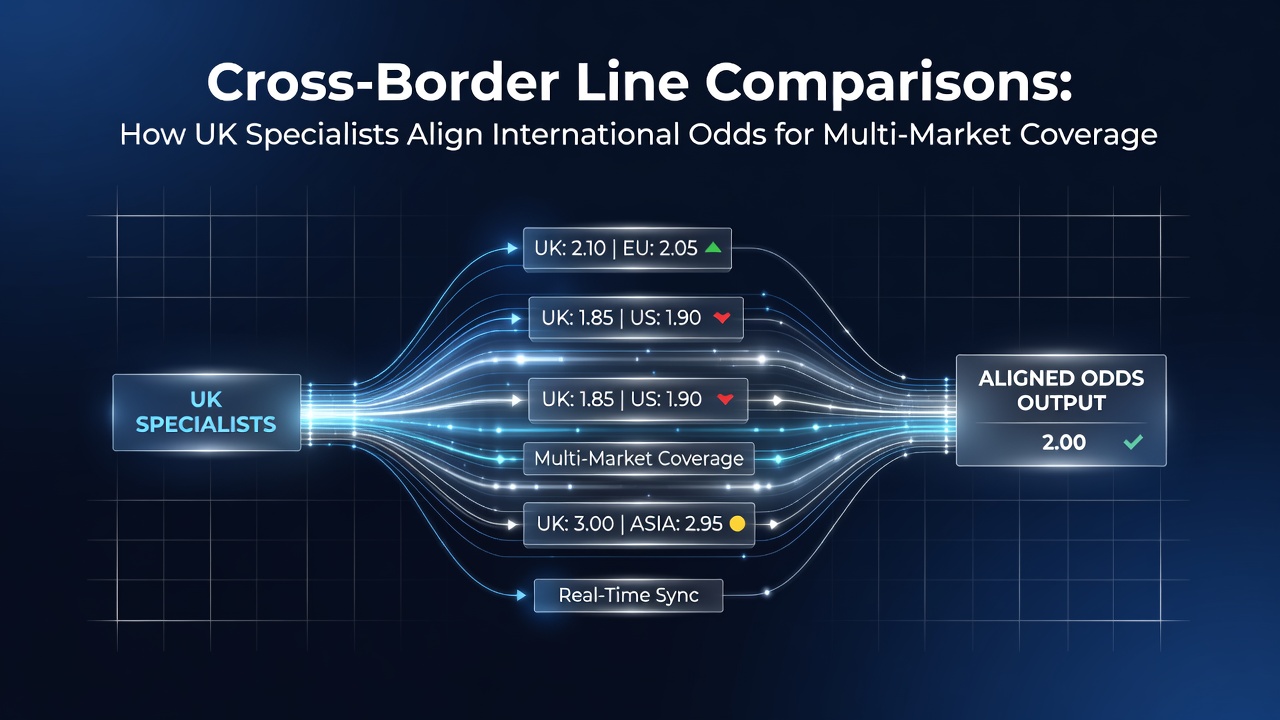
Aligning Worldwide Betting Lines: UK Specialists Expand Coverage Through Cross-Border Odds Comparisons
UK specialists have developed systematic approaches to comparing betting lines from operators based in different jurisdictions and these methods allow them to construct coverage across numerous markets at once. Data compiled by the European Gaming and Betting Association shows that cross-border line variations often exceed 3 to 5 percent on major football and tennis events during June 2026, creating opportunities for coordinated positioning when multiple books are monitored simultaneously.
Specialists begin by establishing direct feeds from operators licensed in Malta, Gibraltar, and several US states while they also maintain connections to Asian exchanges that publish early limits on the same fixtures. This setup produces a live matrix where each price point is tagged by jurisdiction, margin level, and liquidity depth so that discrepancies become visible within seconds of an update from any single source.
Data Aggregation and Real-Time Monitoring Frameworks
Teams rely on custom software that normalises decimal, American, and Hong Kong formats into a single comparative view and the process automatically flags when an international line diverges beyond a preset tolerance band. Observers note that during the opening weeks of June 2026 several UK desks recorded repeated instances where a Spanish bookmaker posted a higher total-goals line than its counterpart in New Jersey on the same Champions League final, prompting immediate multi-market entries that combined the over from one venue with a correlated under on an Asian exchange.
The same platforms track regulatory changes that affect line construction, including tax adjustments in offshore territories that force operators to widen margins. When such shifts occur the software recalculates implied probabilities across all connected books so that specialists can decide whether to maintain, reduce, or reverse exposure before the next wave of limit changes arrives.
Case Examples from Recent Market Cycles
One documented sequence in early June 2026 involved a Wimbledon warm-up event where a UK desk compared lines from an Australian corporate bookmaker, a Swedish operator, and a Philippine exchange. The Australian line on the match total games sat at 22.5 while the Swedish equivalent offered 23.5 and the exchange showed 22.0 with deeper liquidity. Specialists executed a layered position that bought the lower total on the exchange, sold the higher total with the Swedish book, and held a smaller neutralising stake on the Australian line, resulting in coverage that remained profitable regardless of the final game count.

Another instance centred on a Copa Libertadores group-stage match where lines from Brazilian, Peruvian, and Portuguese operators differed on both the Asian handicap and the total corners. The UK team aligned the Brazilian over-corners line with a Portuguese under-corners quote while simultaneously taking the opposite handicap from the Peruvian book, creating a three-way structure that absorbed variance in stoppage-time decisions and card counts.
Regulatory and Liquidity Considerations Across Jurisdictions
Specialists must account for settlement rules that vary by territory, particularly around voided markets and push outcomes on spread bets. Reports from the Nevada Gaming Control Board indicate that certain US operators apply different criteria for weather-related postponements compared with European books, and these differences require pre-trade verification of each jurisdiction's published rules. Failure to map these nuances can leave positions exposed when an event is completed under one set of regulations yet treated as a push under another.
Liquidity depth also fluctuates by region and time of day, so desks maintain internal rankings of which books reliably accept larger stakes without rapid line movement. During June 2026 several desks adjusted their primary allocation toward operators in lower-tax jurisdictions that had recently expanded their international offerings, while they reduced volume with books that had tightened limits following local compliance reviews.
Conclusion
Cross-border line comparisons continue to serve as a core component of multi-market coverage strategies employed by UK specialists. The combination of normalised data feeds, jurisdiction-specific rule mapping, and coordinated execution across exchanges and traditional books enables consistent positioning even as individual operators adjust their offerings in response to local conditions. As regulatory frameworks evolve in multiple territories the same comparative discipline remains essential for maintaining balanced exposure across global events.